
Questions? Call Us
(937) 508-5414
(937) 508-5414

Functional living room furniture should support daily activities like lounging, working from home, entertaining guests, and storage, not just look good.
In a small living room, multi-functional furniture such as sofa beds, lift-top coffee tables, and storage ottomans often matters more than decorative pieces.
Stick to practical spacing rules: keep about 16–18 inches between sofa and coffee table and 30–36 inches for main walkways to maintain healthy traffic flow.
Every seat should have access to a surface like side tables, a coffee table, or console tables, plus at least one light source for true usability.
Vertical storage and slim, raised-leg furniture pieces help maximize storage and keep the room feeling open with a more spacious atmosphere.
A functional home is one where your living room furniture supports real life: relaxing after work, working from home, playing with kids, and hosting friends. Choosing furniture based on use creates a space that serves both relaxing and social needs rather than just looking polished. The living area is typically the busiest shared space, so every piece must earn its place through traffic flow, storage space, and comfortable seating capacity. Multi-functional furniture enhances living room functionality and saves space, which is why it has become essential in 2024–2026 as more people treat their living room as an office, playroom, and guest room combined. Below, we cover sofas, sofa beds, coffee tables, side tables, storage solutions, extra seating, vertical space ideas, and layout ideas that directly improve everyday function, especially in small living rooms.
Your main sofa dictates almost everything about the room: where people sit, how they move through the space, and how many guests fit comfortably. In most living rooms, the sofa anchors the seating arrangement and determines whether the rest of your furniture pieces work together or fight each other.
For a small living space, compact sofas around 60–72 inches wide keep things open. Larger rooms (roughly 12×18 feet or more) can support sectionals or sofas of 84–96 inches. Sofas should have 30–36 inches of circulation space around them to prevent bottlenecks. Raised legs, slim arms, and simple silhouettes keep sight lines open and create an airy atmosphere in tight rooms.
For high-traffic family rooms, look for durable, easy-clean fabrics like performance linen or microfiber with removable covers.

Convertible furniture allows living rooms to transform into overnight sleeping spaces without a dedicated guest room. Sofa beds maximize space by serving as seating and sleeping areas. Modern versions use fold-flat mechanisms with memory-foam mattresses that convert to full or queen sizes.
In a small living room, leave at least 24–30 inches of clearance at the foot of the unfolded bed so it opens fully without obstruction. Daybeds work well in long, narrow rooms where a standard sofa feels bulky, offering a chaise-like arrangement or twin sleeping option. Look for under-seat drawers to maximize storage for bedding and seasonal items.
Sectionals suit medium to larger rooms and open-plan layouts where they can define the living area without walls. A sectional sofa is ideal for narrow living rooms for seating because an L-shape hugs the corner and opens up the center. For example, an L-shaped sectional in a 13×18-foot room pairs well with a rectangular coffee table and two side tables.
Loveseats (around 60–72 inches wide) and compact sofas help a small living room stay open while still providing comfortable seating. In tight spaces, try a loveseat plus two accent chairs instead of two full sofas to maintain good circulation. Modular sofas can be reconfigured to suit different layouts, supporting changing family needs over time. The functional sofa market is projected to grow at roughly 6.5% CAGR through 2034, driven largely by demand for this kind of adaptable seating.
A coffee table provides a central surface for drinks, books, and decor, but it also supports casual meals, laptop work, and game nights. The ideal coffee table is about two-thirds the length of the main sofa, with a height matching or slightly below the seat (roughly 16–18 inches). Leave 16–18 inches between the sofa and coffee table for legroom, and a coffee table should generally be within 15–18 inches of the sofa for easy reach.
Round or oval tables work well in a small living room and high-traffic areas because rounded shapes in furniture create smoother traffic flow and enhance safety. Sealed wood, metal frames, and tempered glass balance style and practicality.
Lift-top coffee tables serve as dual-purpose pieces: a work surface for your laptop and a dining spot in compact homes. Coffee tables with storage provide surfaces while storing magazines, chargers, and essentials in drawers or shelves beneath.
Nesting tables stack to save space when not in use and can reclaim 10–15 square feet of available floor space when stored. They spread out for entertaining guests, then tuck away to free floor space. In studios under about 150 square feet, pair nesting tables with a small-scale sofa or loveseat. Drop-leaf tables expand for workspace or dining and fold flat when not in use, offering another space-saving furniture option.

Extra surfaces near seats prevent clutter on the floor and keep the living room tidy. Ideally, every seat has a reachable spot to set down a drink, phone, or remote. Side table heights should align with the sofa or chair arms, roughly 22–26 inches, for easy reach.
Console tables offer essential surface area for electronics and decor. These narrow pieces sit behind sofas or along walls without eating into the room's visual space.
C-shaped side tables slide under the sofa or chair, saving floor space while still offering a functional surface. Round pedestal tables between two chairs create a compact conversation nook by a window. In very narrow rooms, try a pair of small matching side tables instead of one large coffee table for better flow.
Lightweight, easy-to-move tables add extra surfaces when guests arrive, then tuck away later. Look for models with small drawers or lower shelves to store chargers, coasters, and notepads out of sight.
A console table placed behind a floating sofa can create a subtle room divider in open-plan layouts. Floating furniture improves traffic flow and makes rooms feel larger. Console tables typically stand about 30–32 inches high and are ideal for lamps, baskets, and decor.
Use a console near the entry of the living room to catch keys, mail, and bags. Pair consoles with small stools or poufs tucked underneath to provide extra seating when needed. Cord management along consoles is critical for lamps and chargers to keep walkways clear and maintain an uncluttered feel.
Clutter is one of the biggest barriers to a functional living room. Combining open storage (shelves) and closed storage (cabinets, drawers) creates both easy access and visual calm. Vertical storage and concealed cabinetry keep spaces organized and clear. Extend storage vertically up the wall instead of spreading low, bulky pieces across the floor to preserve available floor space.
A low media unit wider than the TV by 6–12 inches on each side anchors the wall and hides electronics. Bookcases that combine open shelves on top with closed cabinets below balance display with concealment. Typical shelf depths run about 11–13 inches for books and decor, deeper for baskets or board games.
A 12×15 ft living room can use one full wall of shelving without feeling cramped when pieces are anchored properly. Use baskets and boxes inside open shelving to keep small items organized and reduce visual clutter. Always anchor tall units to the wall, especially in homes with children.

Storage benches can hold shoes, toys, and blankets while providing seating. A window seat with lift-up lids or drawers becomes a favorite reading spot near natural light while adding ample storage. In very small living rooms, low storage benches along one wall can replace bulky extra seating.
Under-sofa storage bins on wheels work for items used less often, like holiday decor or spare bedding. Choose washable or removable cushion covers on benches to keep this high-use seating practical. Window treatments like curtains or blinds near window seats add cozy mood lighting control while framing the view.
Extra seating doesn't have to be large or permanent. Accent chairs add flexible seating without crowding the room, and they help balance a sofa or sectional to create conversation zones. In a small space, choose chairs with a smaller footprint and open bases so they don't visually crowd the room. Having at least one upright, supportive chair is helpful for reading, laptop work, or older family members.
Swivel chairs can turn between the TV, window, and conversation area, increasing the room's versatility. Slipper chairs, which are armless and low-profile, work in narrow areas where arms would feel intrusive. Match seat heights across sofas and chairs within a few inches to keep conversation comfortable. Arranging sofas and chairs to face one another fosters interaction, with seats within 8–9 feet of each other for easy conversation.
Benches can sit against walls, at the back of a sofa, or under a window to provide extra seating. Small stools and poufs stored under console tables get pulled out when more seats are needed. Accent chairs and poufs offer flexible seating without occupying permanent space. Upholstered poufs double as soft side tables with a tray on top.
A practical seating plan: a sofa, two accent chairs, and two poufs can comfortably seat 6–7 people in a medium-size living room without overwhelming the room.
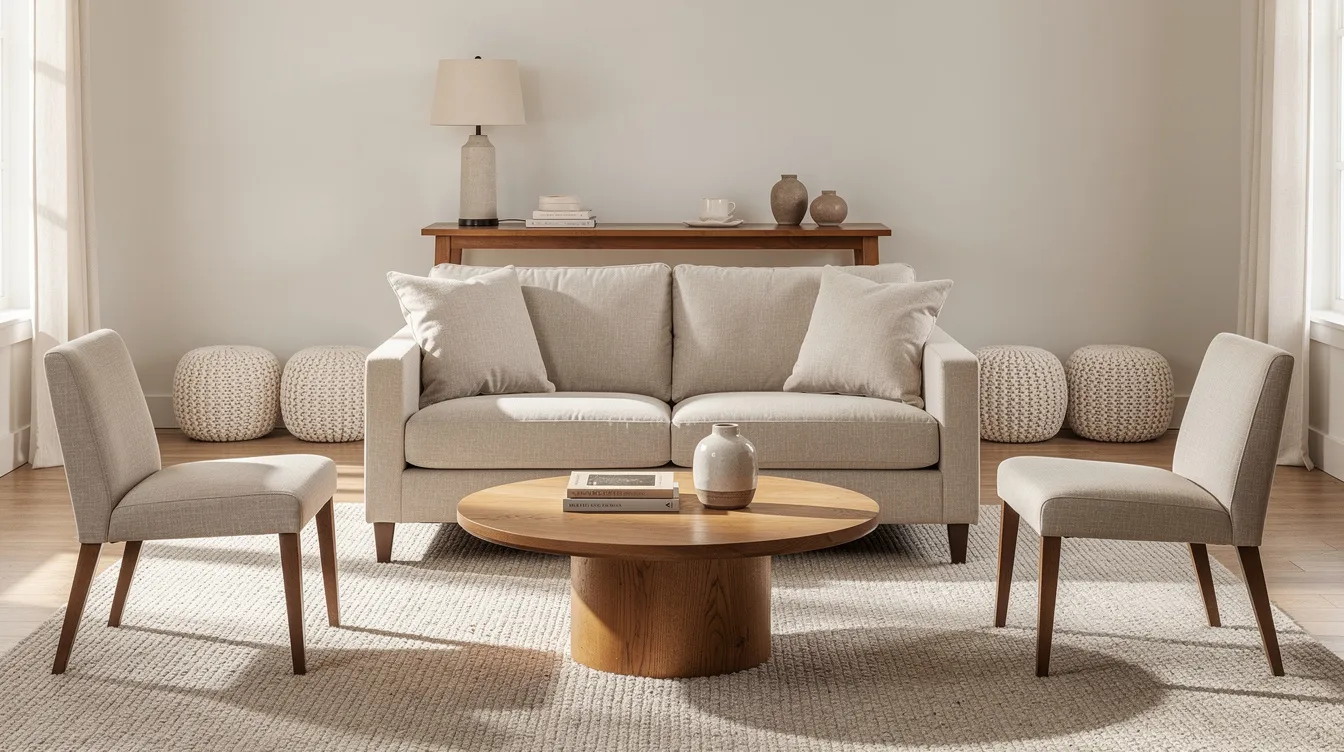
Small living rooms rely heavily on furniture that can perform more than one role. Core multi-functional furniture pieces include sofa beds, storage ottomans, lift-top coffee tables, nesting tables, and storage benches. In rooms under roughly 130–150 square feet, each item should ideally offer seating, storage, or adaptable surfaces. Slim-profile furniture creates an open atmosphere in small rooms, and light-colored furniture enhances brightness and spaciousness even when storage is built in.
Mini case study: A studio apartment of roughly 12×11 feet can work with a compact sofa bed along one long wall (about 72 inches), a lift-top coffee table in front, two nesting tables for extra surfaces, under-sofa wheeled bins, and a storage bench under the window. Wall-mounted desks free up floor space when the room doubles as an office. This approach turns a single room into a larger space functionally.
Storage ottomans provide hidden compartments for organizing items like blankets, toys, and spare pillows. A large square ottoman can replace a traditional coffee table when paired with a tray for stability. Convertible furniture like benches with lift-up tops or side tables that extend into laptop desks stretches every square foot. In compact spaces, a single storage ottoman can be moved around to serve different seating areas as needed.
Using vertical space can help maintain a spacious feel in any room. Wall-mounted shelves maximize vertical space in small living rooms, and floating shelves maximize storage without occupying floor space. Mirrors reflect light, making rooms feel larger, especially when placed opposite a window or near lamps.
Proper lighting is essential for everyday functionality in a living room. Layered lighting includes ambient, task, and accent types, and each layer makes your furniture more usable throughout the day. A floor lamp typically stands 60–70 inches tall and provides direct light for reading or tasks without running wires. Arc floor lamps work particularly well beside sofas. Wall sconces save floor space in small living rooms, and warm light temperatures ranging from 2700–3000K create comfort. Proper lighting placement enhances room usability after dark, turning mood lighting into a practical tool.
Floating shelves above sofas or media units store books and decor without additional bulky furniture. Hooks or small wall racks near the living room entrance catch bags and coats to keep seating areas clear. Wall-mounted or fold-down desks solve the home-office challenge in a small living room without sacrificing the room's sense of openness. Display personal items like photos and plants on vertical surfaces while keeping tables free for daily tasks.

Even the most functional furniture pieces lose effectiveness if poorly arranged. Aim for at least 30 inches of walkway in main routes between major pieces like sofas, coffee tables, and media units. Keep conversation zones compact with seats no more than about 8–9 feet apart. Floating furniture slightly off walls, even by 3–6 inches, creates cozier, more flexible arrangements. Interior designer surveys consistently show that this approach actually makes rooms feel more spacious, not smaller.
Position a compact sofa or loveseat along the longer wall in a narrow room with a small round coffee table in front. Use slim console tables instead of deep cabinets to avoid crowding walkways. A rug defines the seating area and prevents furniture from floating awkwardly. Mirrors and tall shelves at the far end of a narrow room draw the eye and make the room feel larger. Test different arrangements, prioritizing door clearance and sight lines to the window or a fireplace.
The right living room furniture depends on daily routines and household size. Before shopping, list your main activities: movie nights, kids' play, working from home, entertaining guests. Think ahead about storage needs for the next 3–5 years. Prioritize durable, easy-to-clean materials for high-use pieces like sofas, coffee tables, and ottomans. The ceiling on what you can achieve in any room rises dramatically when every piece is chosen for real-life use, not only appearance.
When shopping online for furniture, keep basic digital security in mind. Some shoppers encounter messages referencing a security service or a Cloudflare Ray ID found on retail sites. This is a standard security solution that protects against online attacks. If a site displays a Cloudflare Ray ID or mentions that an action you performed triggered the block, it usually means the security service flagged an SQL command, malformed data, or a certain word in your request. Simply contact the site owner to resolve access. These protections, much like the Cloudflare Ray ID system, guard against threats. You may occasionally need to access Microdinc or similar platforms, so don't be alarmed if a security check is triggered by normal browsing. It's a routine measure, not a reflection on you.
Start with a comfortable main seating piece like a sofa or sofa bed and a functional coffee table, since these support daily use in every living room. Add side tables and lighting next, then storage furniture like media units or bookcases as budget allows. In a small living room, choose multi-functional furniture early so you don't run out of space. Always measure the room carefully before purchasing.
Vertical storage, like tall shelves and wall-mounted units, usually feels lighter than many short, bulky pieces on the floor. Mix closed storage for clutter with open shelves for decor to keep the room visually balanced. Use hidden storage in benches, coffee tables, and ottomans to reduce the number of separate cabinets needed. Keep pathways clear and avoid blocking windows to preserve a spacious atmosphere.
Use movable pieces like stools, poufs, and narrow benches that tuck under tables or against walls when not needed. Armless or slipper chairs have a smaller visual footprint than chunky armchairs. A compact loveseat plus two slim chairs can seat as many people as a large sectional in a small space. Keep upholstery in light or neutral colors arranged in odd numbers for a natural, balanced look so extra seating blends in rather than dominating the room.
Core pieces like sofas and coffee tables typically last 7–10 years when chosen well and maintained properly. Reassess whenever life changes significantly, such as working from home more or having children. Smaller updates like adding a storage ottoman or swapping a fixed coffee table for a lift-top design can refresh functionality before replacing everything. Sometimes, rearranging existing furniture solves problems without any new purchases.
Prioritize a comfortable, supportive seat and a stable work surface like a lift-top coffee table or wall-mounted desk. Add good task lighting near the work area and accessible storage for laptops, paperwork, and chargers. Use baskets or boxes within media units or shelves to hide work items at the end of the day, helping the living space stay calm, cozy, and welcoming for the dining room-adjacent relaxation you deserve after hours.

Refresh your home with Living Room Furniture at Theo's Factory Direct Mattress & Furniture, featuring quality furnishings that combine comfort, style, and everyday functionality. From plush sofas and spacious sectionals to recliners, coffee tables, and complete living room sets, you'll find everything you need to create a welcoming space.
Visit Theo's Factory Direct Mattress & Furniture today to explore our Living Room Furniture collection and discover pieces that fit your home, lifestyle, and budget. Our knowledgeable team is here to help you choose durable, attractive furniture that brings lasting comfort and timeless appeal to your living room.
Delivery
Check what it costs to get this order to your door.